

The Set-It-And-Forget-It Portfolio Update August 2026

Let's take a look at how my Set-It-and-Forget-It Portfolio is doing this year. Here is how the six funds in this portfolio are perfoming so far for 2026.
Step #1: Decide on Your Stock-to-Bond Ratio
The first step is deciding how much of your investment portfolio you are comfortable holding in stocks versus bonds. A common starting point might be 70% stocks and 30% bonds, but the right mix depends on your age, goals, time horizon, and comfort with market fluctuations.
If you are younger and investing for retirement many years in the future, you may be comfortable with a much higher stock allocation, potentially even 100% stocks and 0% bonds. On the other hand, money that you expect to need in the near future should generally be treated differently.
For example, if you are saving for a home purchase, I would normally keep that money in bonds or other relatively stable investments rather than stocks. The stock market can decline substantially at exactly the wrong time. If you do invest house savings in stocks, you need to be willing and financially able to postpone the purchase while waiting for the market to recover.
Example Portfolio
Total Investments: $50,000
- 70% Stocks: $35,000
- 30% Bonds: $15,000
That $15,000 bond allocation could include money being accumulated for a future home purchase or another shorter-term financial goal.
Step #2: Separate the Stocks You Actively Manage
Next, look only at the stock portion of your investments and determine how much of it you want to essentially “set and forget.”
If you own individual company stocks, separate those from the portion of your portfolio that you want invested automatically. Individual stocks require more attention because the performance and financial condition of a single company can change dramatically.
If you own individual stocks, I assume you are following those companies and reviewing the investments regularly. If you are not willing to monitor individual stocks, I would generally prefer owning diversified stock funds instead.
Example
Total Stock Investments: $35,000
Individual Stocks You Actively Manage: $5,000
Stocks You Want to Set and Forget: $30,000
That remaining $30,000 is the portion we will use to build a diversified long-term stock allocation.
Step #3: Divide the Long-Term Stock Portion
Now take the portion of your stock investments that you want to set and forget and divide it according to your target stock allocation.
This is where we begin deciding how much should be invested in broad U.S. stocks, international stocks, large companies, smaller companies, or any other categories included in the investment strategy.
The goal is to create a simple target allocation that can be maintained over time without constantly trying to predict which part of the market will perform best next.
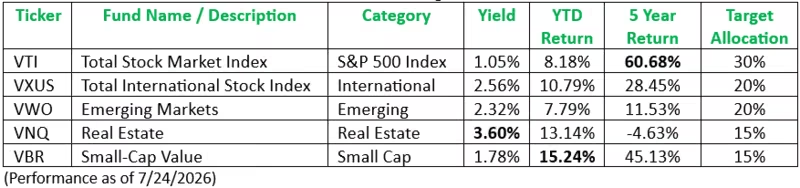
The portfolios look like they are doing their job in diversifying risk (and rewards). With the modest gains in all these markets, it looks like there might be some corrections ahead of us this year if the Iran war affects global markets.Performance of the Five Equity Funds on 2026-07-24
Step #4
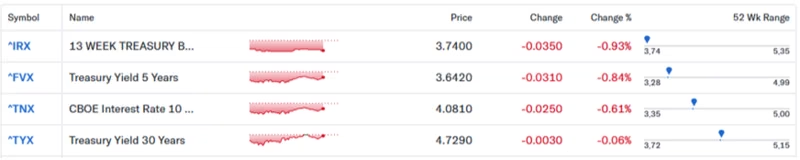
High Yield Savings. The Fidelity SPAXX is at 3.29%, E*Trade Premium Savings is: 3.5%Bond Yields have come down a bit with current Yields at:
High Yield Savings Bonds
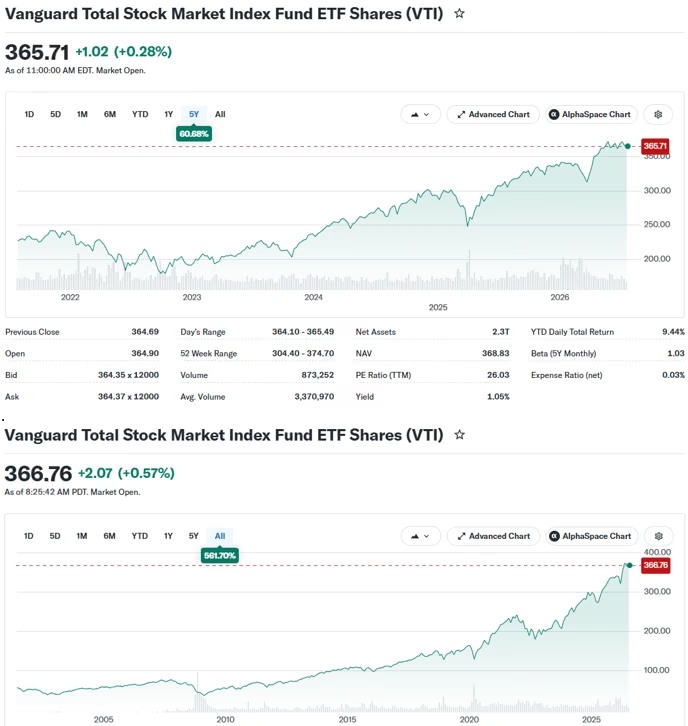
VTI
The Total Stock Market continues to perform at a high level with the YTD at 8.18% and a yield of 1.05%. PE Ratio is 26.03.VTI 1-year and 5-year Performance
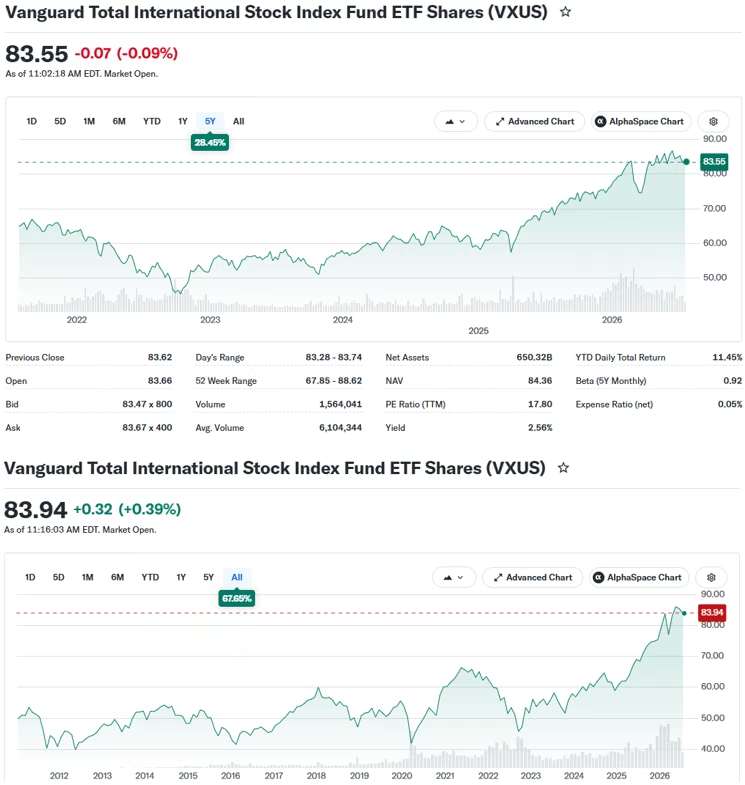
VXUS
The Total International Stock Index perform well in 2026 with the YTD at 10.79% and a yield of 2.56%. PE Ratio is 17.80.VXUS 1-year and 5-year Performance
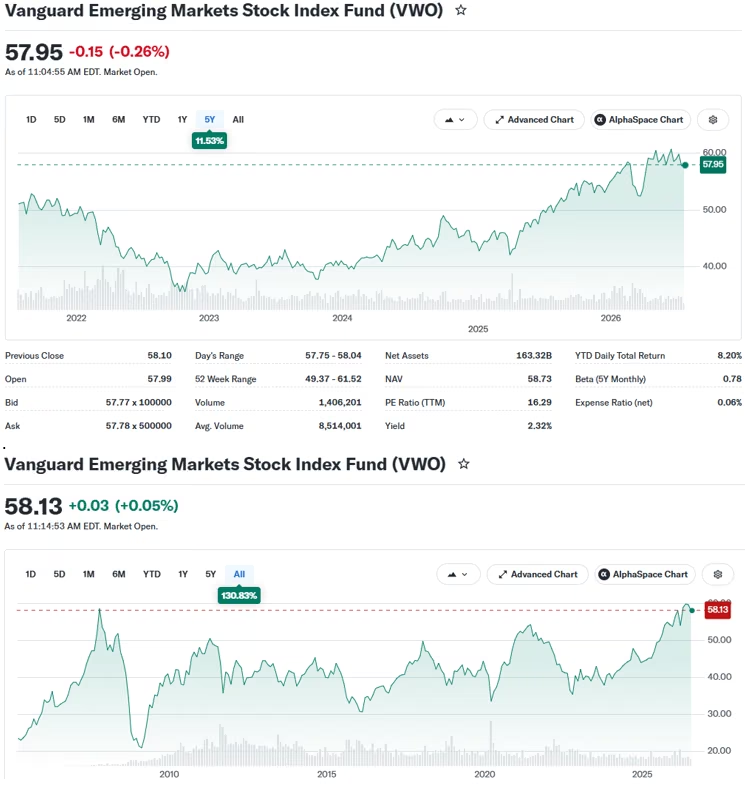
VWO
The Total Emerging Markets Stock Index had a great 2026 with growth of 7.79% YTD and a yield of 2.32%. PE Ratio is 16.32.VWO 1-year and 5-year Performance
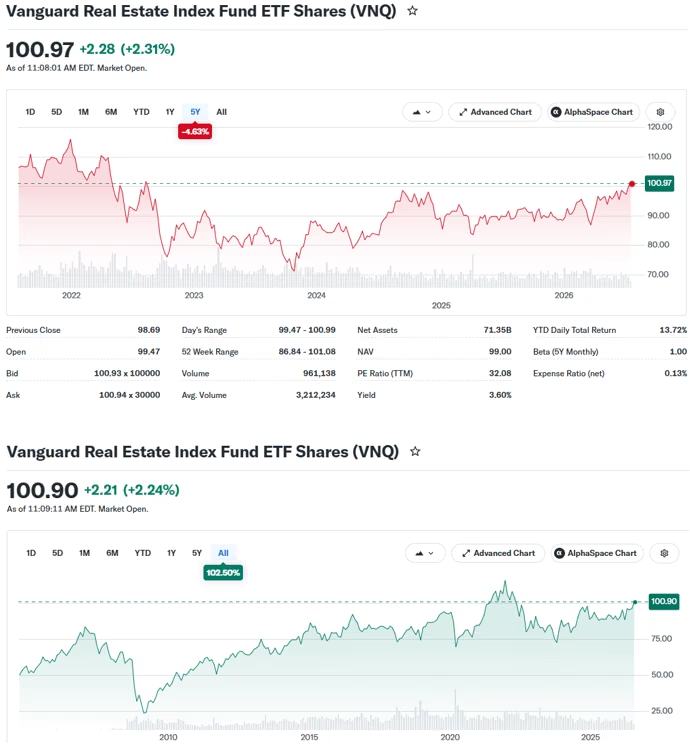
VNQ
The Real Estate Index Fund was up a little this year with a YTD of 3.44% and a yield of 3.86%. PE Ratio is 32.07.VNQ 1-year and 5-year Performance
VBR
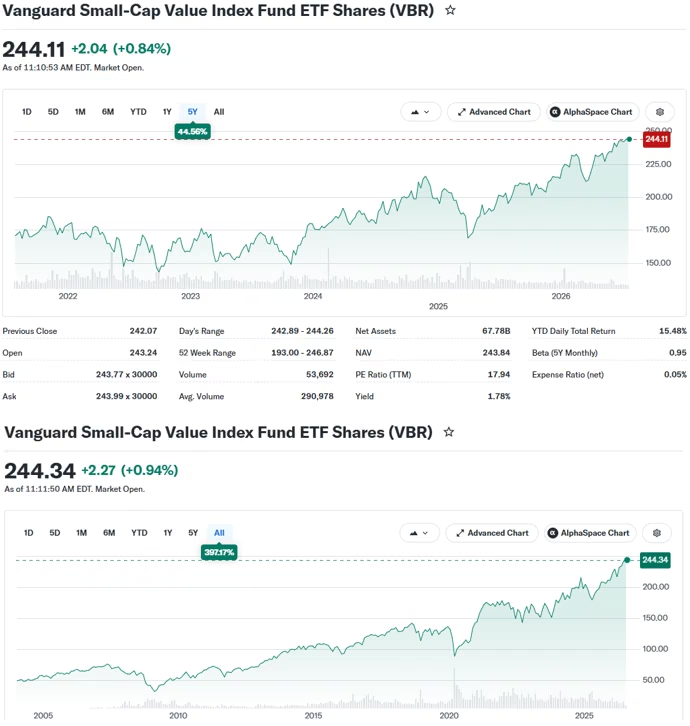
The Small-Cap Value Index had a great 2026 with the YTD at 15.24% and a yield of 1.78%. PE Ratio is 17.94.VBR 1-year and 5-year Performance